When your AC won't turn on, start at the two cheapest and most common causes before anything else: the thermostat settings and the electrical panel. A surprising share of no-start calls we take across Stafford end at a thermostat set to the wrong mode, dead thermostat batteries, a tripped breaker, or a safety switch that did its job. These are things you can check safely in a few minutes without any tools.
This guide moves from the simplest fixes to the ones that need a professional, in the same order a technician would work. Go through it step by step. If you reach a point where the system still will not start or you run into anything electrical that feels beyond a reset, stop there and call a licensed pro rather than risk the equipment or yourself.
Start With the Thermostat
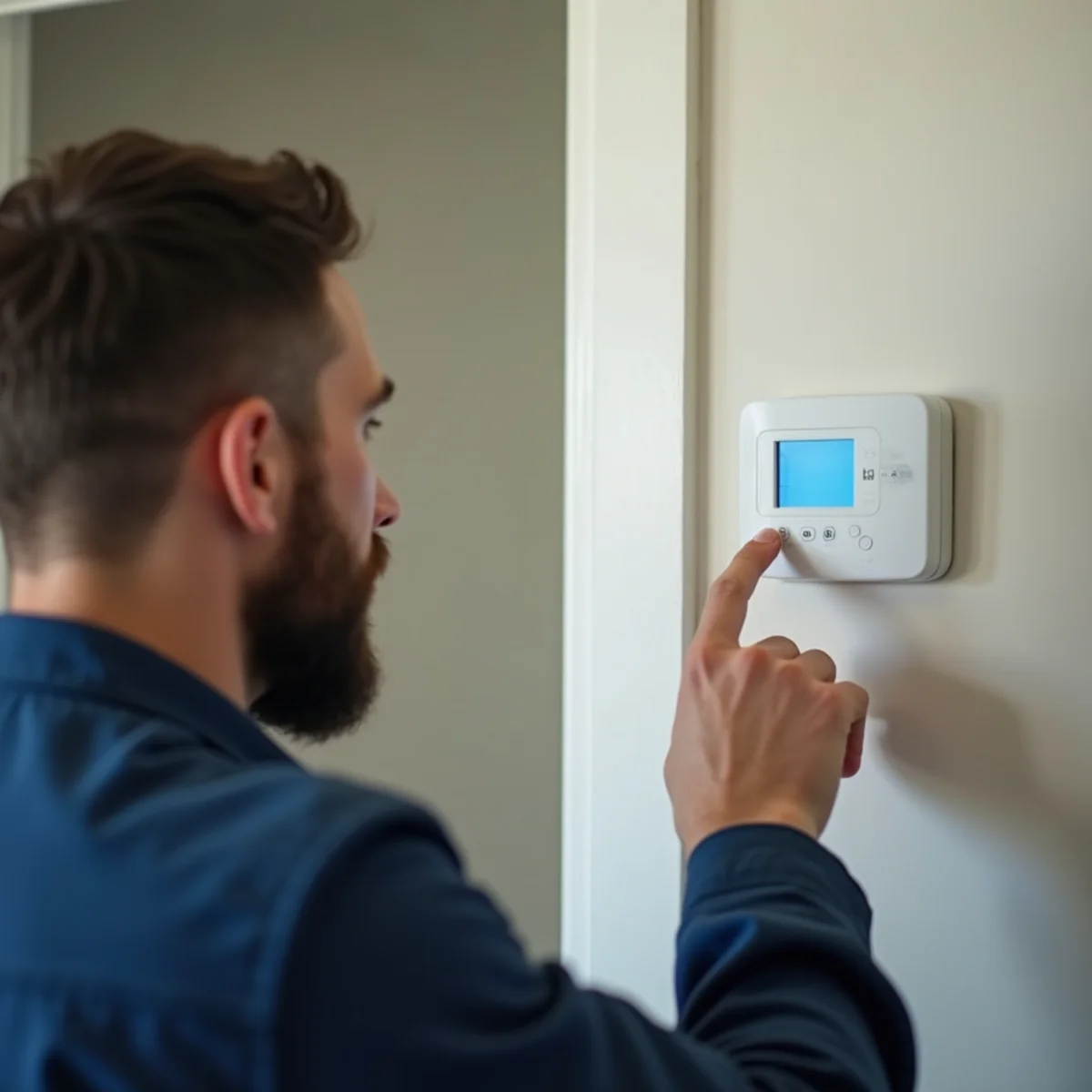
The thermostat is the brain of your system, and it is the first place to look. Confirm it is set to COOL and the fan is set to AUTO, then drop the temperature setpoint at least five degrees below the current room temperature so the system has a clear reason to start. On a hot Stafford afternoon the house can already be warmer than the setting, which leaves the AC with no call to run.
If your thermostat screen is dim, blank, or frozen, replace the batteries, even if it is hardwired, many models keep a battery backup. A thermostat mounted in direct sun or near a kitchen can also misread the temperature. If the screen stays dark after fresh batteries, the thermostat itself or its low-voltage wiring may be the problem.
Check the Electrical Panel and Switches
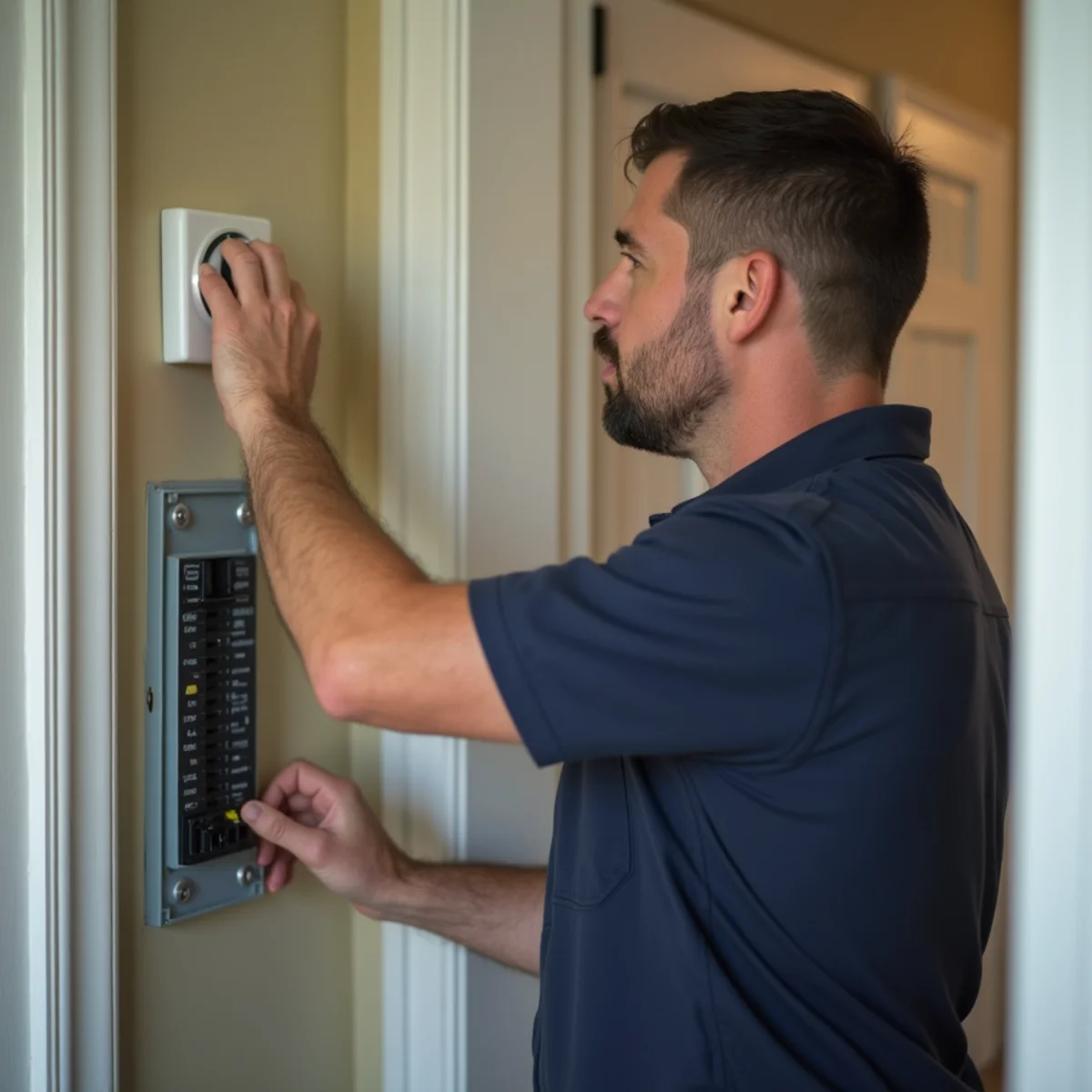
Air conditioners draw a lot of current, so they sit on their own breaker, and that breaker trips when something draws too much. Walk to your electrical panel and look for a breaker that is out of line with the others or sitting in the middle. Here is the safe way to work through the electrical checks:
- Find the AC breaker (often a double-width breaker) and flip it fully OFF, then back ON one time only
- Look for a separate indoor furnace or air-handler switch, which looks like a light switch near the unit, and make sure it is ON
- Check the outdoor disconnect box near the condenser to confirm the pull-out is fully seated
- Confirm the condensate float switch or safety switch has not tripped from a full drain pan
Why You Should Never Reset a Breaker Twice
If the breaker trips again the instant you reset it, stop. A breaker that trips repeatedly is not being fussy, it is protecting you and your equipment from a genuine fault, often a failing compressor, a shorted capacitor, or damaged wiring. Resetting it over and over can burn out an expensive component or create a fire risk.
One reset is reasonable. A second trip means the system is telling you it needs a technician with a meter, not another flip of the switch. Leave the breaker off, note what you saw, and call for service. This single habit saves Stafford homeowners from turning a repairable fault into a compressor replacement.
Look at the Filter, Vents, and Condensate Pan
A system can appear dead when it has actually shut itself down for self-protection. A severely clogged filter can freeze the coil and stop airflow, and many units then refuse to restart until they thaw. Pull your filter, and if it is gray and matted, replace it before anything else.
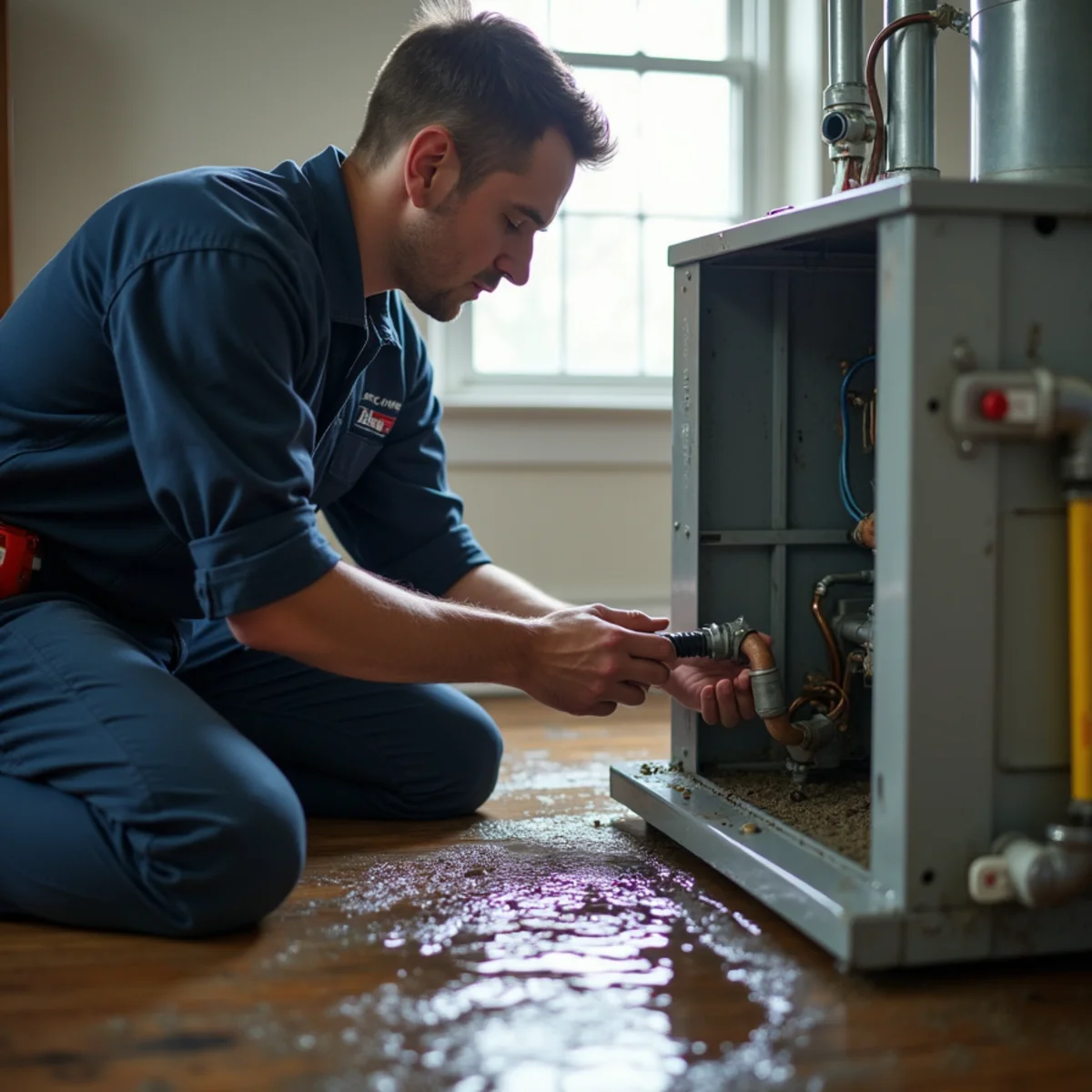
Next, check the condensate drain pan near the indoor unit. If it is full of water, the float safety switch has likely tripped to prevent an overflow, and that switch keeps the system off on purpose. Clearing the clogged drain line, as covered in our water-leak guide, often brings the system right back. Make sure supply and return vents are open and unblocked by furniture or rugs so the system is not starving for air.
Listen and Look at the Outdoor Unit
Go outside to the condenser and pay attention to what it does when the system should be running. If you hear a low hum but the fan is not spinning, the unit may have a failed capacitor, the most common AC part failure we see in Stafford. A capacitor is the small cylinder that gives the motors their starting jolt, and when it dies the motor hums but cannot turn.
If you hear clicking, buzzing, or nothing at all, or you smell anything burning, do not keep trying to force a start. Those are signs of electrical faults that need testing. A capacitor, contactor, or control board failure can only be safely diagnosed with the power managed properly and the right tools, which is where a professional takes over.
When It Is Time to Call a Licensed Technician
Call for service if the thermostat is set correctly but nothing happens, if the breaker trips a second time, if the outdoor fan will not spin, or if you hear buzzing, clicking, or smell burning. These point to capacitor, contactor, compressor, or wiring problems that are not homeowner repairs and can be dangerous to attempt.
In our summer heat, a house without cooling gets uncomfortable fast and genuinely risky for older adults, infants, and anyone with a health condition. That is exactly what fast emergency AC repair is for. A technician will test the capacitor, contactor, refrigerant charge, and controls safely and get you running again, often the same day.
Related Stafford HVAC Help
Frequently Asked Questions
Not usually. A blank screen most often means dead thermostat batteries or a tripped float safety switch that cut power to the thermostat because the condensate pan is full. Replace the batteries first, then check the drain pan. If the screen stays dark with fresh batteries and a clear pan, the low-voltage wiring or thermostat may need a technician.
That is the classic sign of a failed run capacitor, the single most common AC component failure. The motor is getting power but lacks the jolt it needs to start turning. A capacitor is an inexpensive part, but it stores a charge and must be tested and replaced by a technician. Do not try to spin the fan by hand to force it.
It depends on who is home. For healthy adults, a day is uncomfortable but manageable with fans, closed blinds, and hydration. For infants, older adults, and anyone with a heart or respiratory condition, indoor heat and humidity become a real health risk within hours. When vulnerable residents are affected, treat a no-cooling failure as an emergency.
An AC that will not start is often an easy fix: the thermostat was on the wrong setting, the batteries were dead, a breaker tripped, or a clogged drain pan triggered a safety switch. Working through the checklist in order will get a real share of Stafford systems running again without a service visit.
But a breaker that keeps tripping, a humming fan that will not spin, or any burning smell is your system asking for trained help. Do not force it and do not keep resetting it. Call HVAC Stafford VA at +1 (327) 210-5999 and we will get a licensed technician on the way to diagnose it safely and restore your cooling.
Call +1 (327) 210-5999