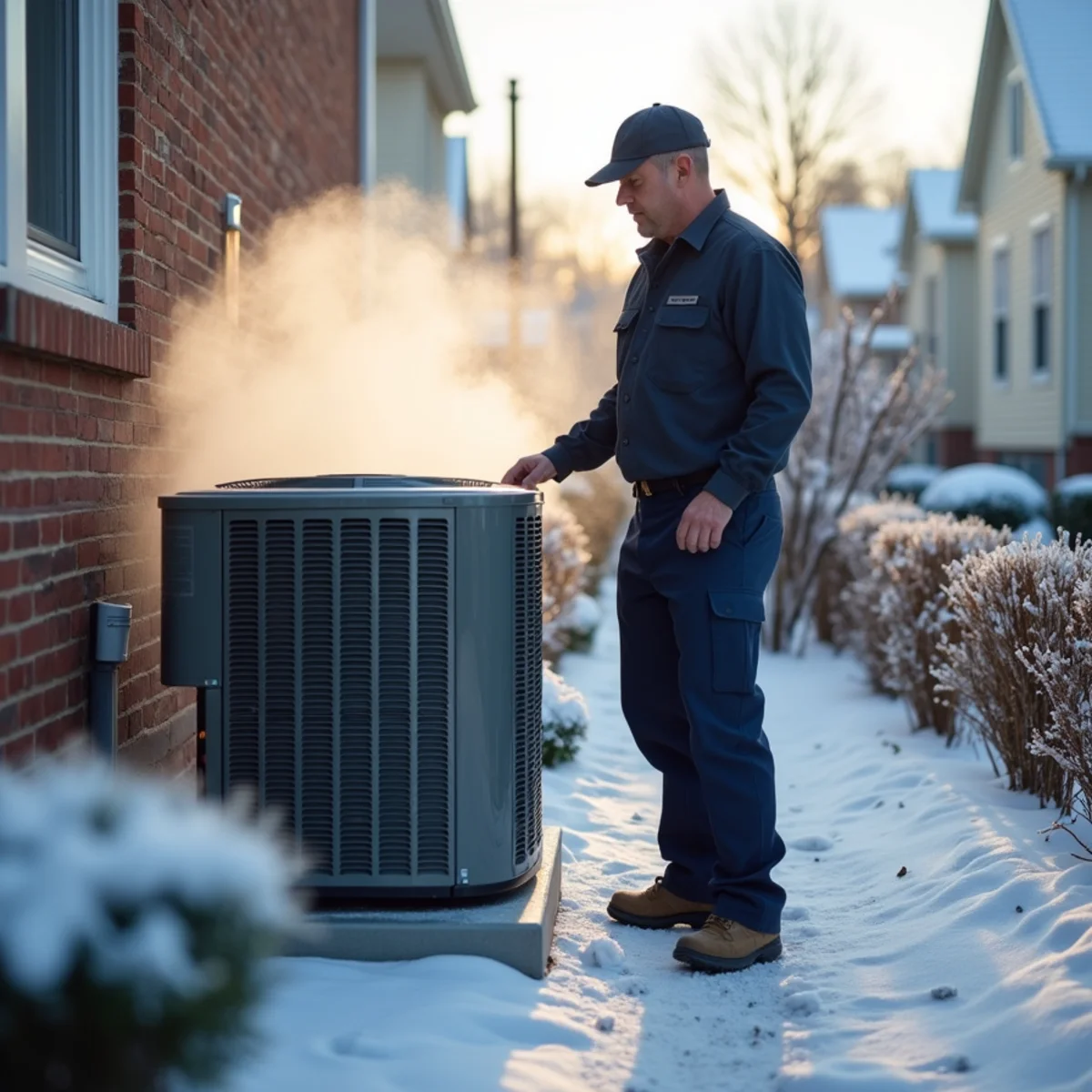
The first time a homeowner watches their heat pump billow steam on a cold Stafford morning, the reaction is usually alarm. Is it on fire? Is it broken? Then they walk inside, feel cool air coming from the vents, and become convinced something is seriously wrong. In most cases, nothing is wrong at all. You are watching defrost mode, a completely normal and necessary part of how a heat pump works in winter.
But not every case of a heat pump not heating is harmless defrost. The trick is knowing the difference between the normal cycle and a genuine fault, so you do not panic over routine operation or ignore a real problem. Here is what is actually happening out there on a frosty morning.
How a Heat Pump Heats Your Home
Unlike a furnace that burns fuel to make heat, a heat pump moves heat. In winter, it pulls warmth out of the outdoor air, even cold air holds heat energy, and transfers it inside. This is what makes heat pumps so efficient in Stafford's mild winters, where outdoor temperatures usually sit in the range where a heat pump works beautifully.
Because it is extracting heat from cold outdoor air, the outdoor coil gets very cold, colder than the air around it. In our humid climate, that causes frost and ice to build up on the outdoor coil. And a frost-covered coil cannot absorb heat efficiently, which is exactly why the defrost cycle exists.
What Defrost Mode Looks Like
To melt the frost, the heat pump periodically reverses itself, temporarily running in cooling mode to send warm refrigerant out to the coil and melt the ice. During this cycle, which typically lasts a few minutes, the outdoor unit steams dramatically as the ice melts and evaporates. That steam is the alarming sight that worries people, and it is entirely normal.
While the heat pump is defrosting, it is not heating your house, so the indoor air can feel cool for those few minutes. Good systems briefly engage backup heat during defrost to keep the indoor air from getting too cold. Once the frost is gone, the system switches back to heating mode automatically. A defrost cycle every so often on a cold, damp morning is healthy operation, not a malfunction.
- Steam rising off the outdoor unit is melting frost, and is normal
- Defrost cycles last a few minutes and happen periodically in cold, damp weather
- Cool indoor air for a few minutes during defrost is expected
Why Heat Pump Air Feels Cooler Than a Furnace
Here is a source of confusion that is not actually a problem. Heat pump air feels cooler than furnace air even when everything is working. A gas furnace blasts air at well over 100 degrees, which feels hot on your skin. A heat pump delivers a larger volume of gently warm air, often in the range that is warmer than your body's skin temperature but cooler than furnace air.
This means air from a heat pump vent can feel lukewarm even while it is steadily and efficiently warming your home. Many homeowners new to heat pumps mistake this for a fault. If the house is holding its temperature and slowly warming, the system is doing its job, just in a gentler way than the furnace you may be used to.
When It Is a Real Problem
Now the genuine faults. If the outdoor unit is encased in a solid block of ice that never melts, the defrost cycle is failing, and that is a real problem, often a bad defrost control board, sensor, or reversing valve. If the unit runs constantly and the house keeps getting colder, the system is not keeping up.
Other red flags: the outdoor fan will not turn at all, the system trips its breaker, or you hear grinding or screeching. And if the indoor air is genuinely cold rather than lukewarm, the backup heat may not be engaging when it should. These are the cases where professional heat pump services are warranted, because a failing reversing valve or defrost control is not a DIY repair.
Simple Things to Check First
Before you call, a couple of quick checks. Make sure the outdoor unit is clear of leaves, snow drifts, and debris that could block airflow and cause excess icing. Confirm the thermostat is set to HEAT, and check your air filter, because a clogged filter hurts a heat pump just as it hurts an AC.
Also confirm the system is not stuck in EMERGENCY HEAT mode, a setting that runs only the expensive backup heat and bypasses the efficient heat pump. If everything checks out and the unit is still icing over solid or blowing cold air, it is time for a technician. We service heat pumps throughout the county, including the Seven Lakes area, and we know these systems inside and out.
Related Stafford HVAC Help
Frequently Asked Questions
No, that steam is almost always a normal defrost cycle melting frost off the outdoor coil, and it lasts only a few minutes. Turning the system off interrupts a healthy process. Only be concerned if the unit stays encased in solid ice that never melts, which points to a defrost system fault worth a technician's attention.
Brief cool air during a defrost cycle is normal, because the system temporarily reverses to melt frost. Heat pump air also naturally feels cooler than furnace air even when working properly. If the air is genuinely cold for long stretches and the house is dropping, though, the backup heat may not be engaging and it needs a look.
Emergency heat runs only the backup electric or gas heat and bypasses the efficient heat pump, which makes it expensive to run. It is meant as a temporary measure if the heat pump itself has failed, not for everyday cold weather. If you find your system set to emergency heat without reason, switch it back to normal heat and monitor performance.
A heat pump that steams, cycles into defrost, and delivers gently warm rather than blazing hot air is almost always working exactly as designed for a Stafford winter. The real problems, a coil frozen solid, a unit that will not keep up, a fan that will not turn, look different and demand a technician. Knowing the difference saves you a lot of needless worry.
If your heat pump is genuinely not keeping your home warm, call HVAC Stafford VA at +1 (327) 210-5999. We will diagnose whether it is normal operation or a fault that needs repair.
Call +1 (327) 210-5999