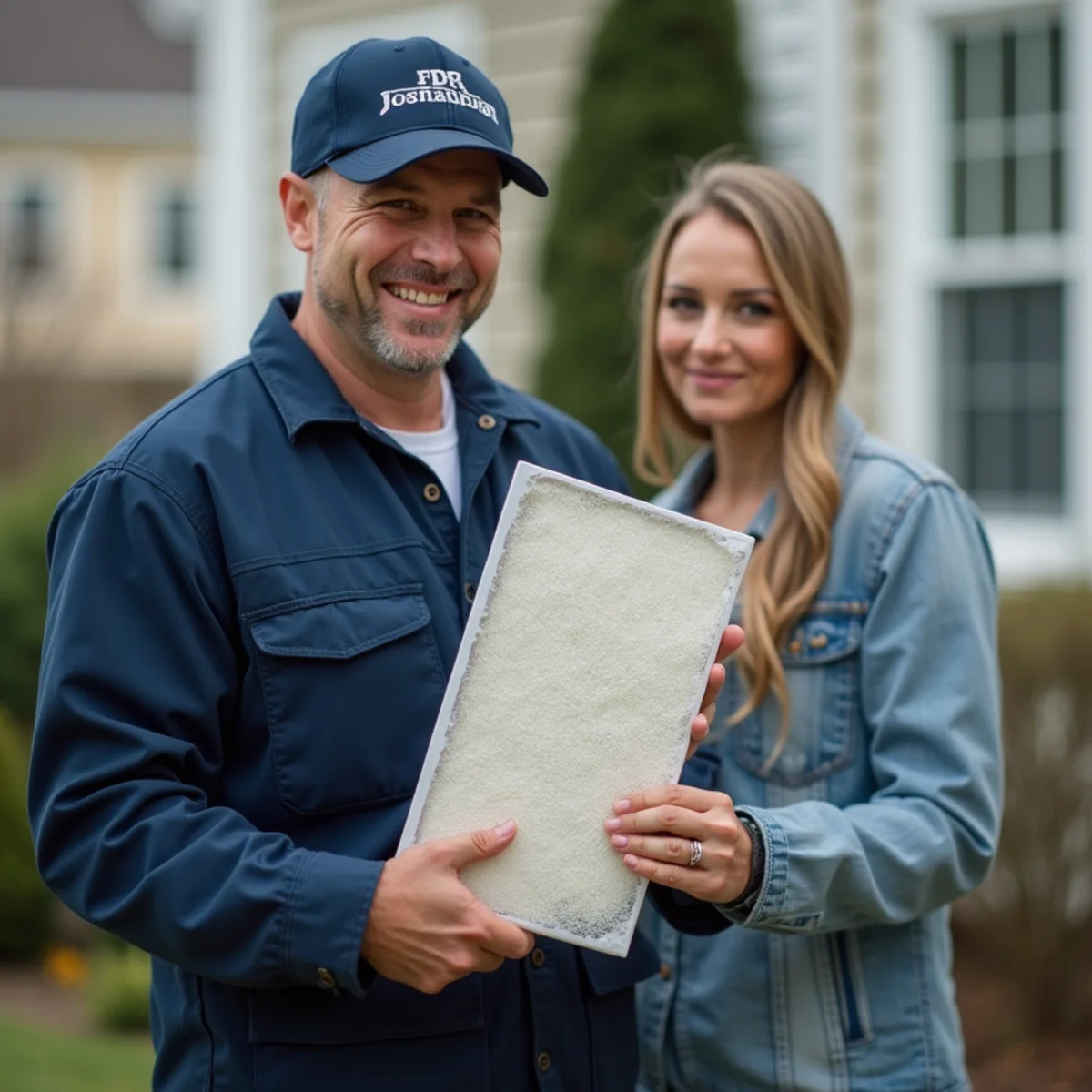
Every spring, Stafford turns yellow. Pine, oak, and cedar dump pollen so thick you can write your name on the car. It coats the deck, the windowsills, and, whether you notice it or not, the inside of your HVAC system. For anyone in the house with allergies or asthma, the weeks from late March into May can be miserable.
Your air conditioner is not an air purifier, but it moves every cubic foot of air in your home through a filter several times a day. That makes it either your best defense against pollen or its main distribution system, depending on how it is set up. Here is how to make it the former.
How outdoor pollen becomes an indoor problem
Pollen gets inside every time a door opens, and it rides in on clothes, pets, and shoes. Once it is in the house, your HVAC system recirculates it. If your filter is cheap or clogged, those fine particles pass right through and get blown back into every room, over and over.
It also settles inside the ductwork and on the evaporator coil. A neglected system builds up a layer of pollen, dust, and organic debris that becomes a reservoir. Every time the blower kicks on, some of that gets stirred up and redistributed. That is why some homes feel worse indoors than out during peak season.
Your filter is the front line, and most are undersized for the job
The thin fiberglass filter that came with the house is designed to protect the equipment, not your lungs. It catches large debris and lets fine pollen through. Stepping up to a pleated MERV 11 to 13 filter captures far more of the particles that trigger allergies.
There is a balance to strike. Too restrictive a filter on a system not designed for it chokes airflow and hurts performance. The right answer for allergy-prone Stafford homes is often a high-quality media filter in a properly sized cabinet, which captures fine pollen without starving the blower. During peak season, check it monthly.
- Fiberglass panel filters: protect equipment, not your allergies
- MERV 11-13 pleated: strong pollen capture for most homes
- Whole-house media cabinet: high capture with good airflow
- Check and change filters monthly during spring pollen season
Beyond the filter: what actually clears the air
For homes with serious allergy or asthma sufferers, a better filter is the start, not the finish. Whole-house air cleaners, UV coil treatments to keep the coil clean, and proper ventilation all help. Which combination makes sense depends on your home and who lives in it.
Humidity control matters too. Dust mites and mold thrive in damp air, and both are common indoor allergens on top of the pollen. Keeping indoor humidity in a healthy range with proper dehumidification reduces the total allergen load, not just the pollen piece.
Duct condition: the hidden reservoir
If your ducts have never been inspected and the system is a decade or two old, there is a good chance they hold years of accumulated pollen and dust. Leaky return ducts in a dusty crawlspace or attic pull in even more debris and spread it through the house.
Sealing leaky ducts and, where warranted, cleaning them removes that reservoir and keeps the air you paid to filter from getting re-contaminated on the way to your rooms. It is a bigger contributor to indoor air quality than most homeowners realize.
Beyond Filters: A Layered Approach to Cleaner Air
A better filter is only the first layer. Stafford's spring pollen finds its way indoors through leaky ductwork in attics and crawlspaces, gaps around windows and doors, and simply on shoes and pets. Sealing duct joints and the building envelope keeps far more pollen out than any filter can catch after it is already circulating.
Humidity is the second lever: pollen and dust mites thrive in damp air, so keeping indoor humidity in the 40-to-50-percent range with proper dehumidification makes the whole home feel cleaner and calmer. For sensitive households, a media cabinet or a UV-C system can add another layer — but only after the basics of filtration, sealing, and humidity are handled.
Related Stafford HVAC Help
Frequently Asked Questions
A MERV 11 to 13 pleated filter captures most pollen while still allowing good airflow in most residential systems. Go higher only if your equipment is designed for it, since an overly restrictive filter chokes airflow. When in doubt, a properly sized media cabinet is the safe upgrade.
It can, if you have a good filter. Setting the fan to "on" keeps air moving through the filter even when the system is not actively cooling, which increases how often the air gets cleaned. Just expect a bit more energy use and change the filter more often.
It can help when ducts hold a real buildup of pollen and dust, especially in older systems. But it is most effective paired with sealing leaks and upgrading your filter. Cleaning alone, without fixing what let the debris in, gives only temporary relief.
You cannot stop Stafford's pines and oaks from doing their thing every spring, but you do not have to let that pollen take over the inside of your home. A better filter, humidity control, and healthy ductwork turn your HVAC system from a pollen spreader into your best line of defense.
HVAC Stafford VA installs and services indoor air quality equipment across the county. Call +1 (327) 210-5999 to talk through the right setup for your home and your family's allergies.
Call +1 (327) 210-5999