Most HVAC emergencies do not come out of nowhere. They give warning signs for weeks, a new noise, a slightly weaker airflow, water where there shouldn't be, and nobody notices because nobody looks. A short, regular walkaround changes that. Fifteen minutes a month puts you ahead of the problems.
This is not a substitute for a professional tune-up, and you should not be opening electrical panels or touching refrigerant. It is a homeowner's habit of looking, listening, and smelling, so you catch trouble early. Here is the routine we recommend for Stafford homes.
Start at the filter and the thermostat
Pull the filter and look at it. If it is gray or you cannot see light through it, change it. During pollen season and peak summer that may be monthly. This one check prevents more problems than anything else on the list.
At the thermostat, confirm it holds the temperature you set and cycles normally, not on and off every few minutes. If it runs batteries, a weak battery can cause odd behavior. Note whether the house actually reaches the setpoint in a reasonable time; if it struggles, that is worth flagging.
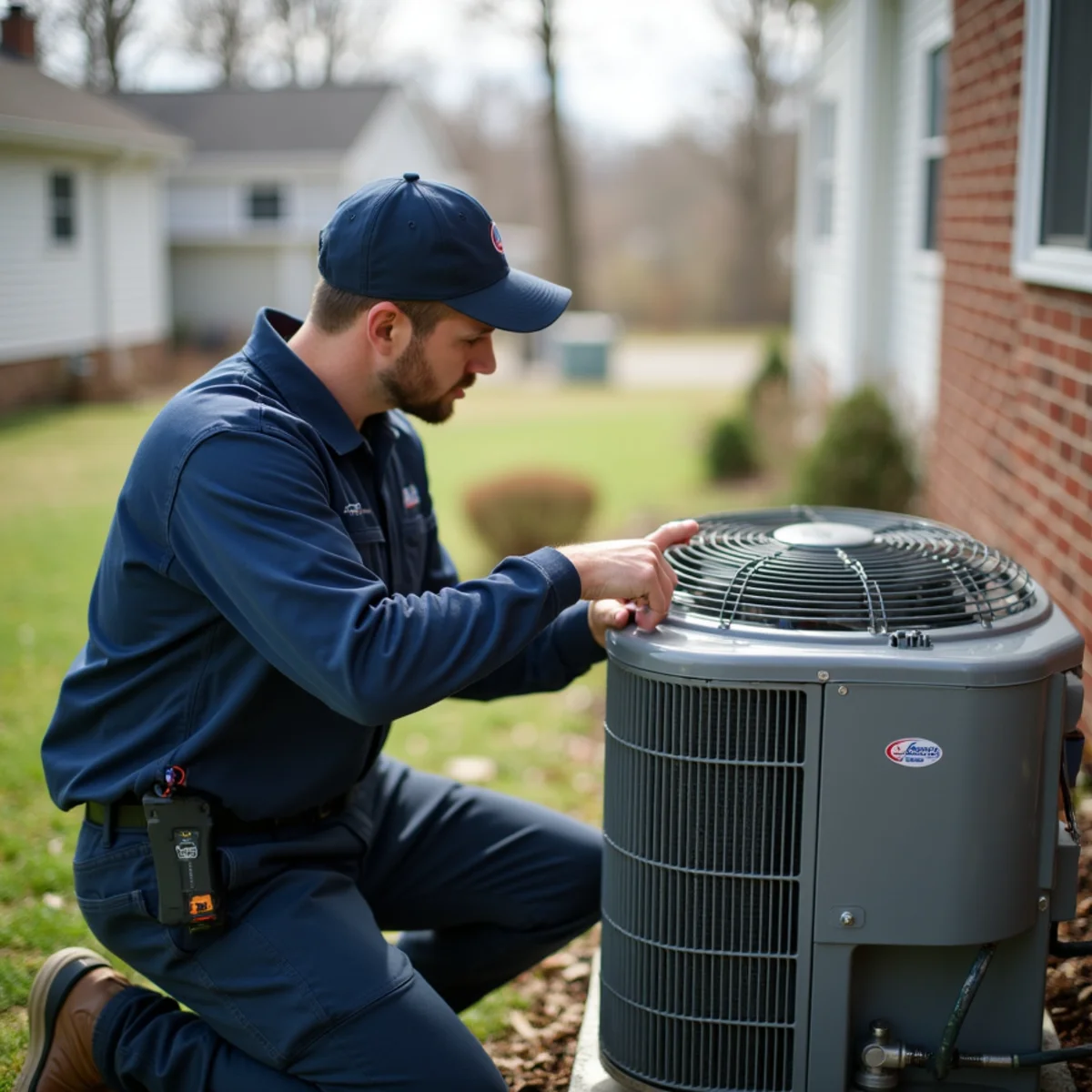
Walk the outdoor unit
Head outside and look at the condenser. Clear away any leaves, pine straw, or grass clippings piled against it, and make sure nothing is crowding it within a couple feet. Listen while it runs, a healthy unit hums steadily; grinding, buzzing, or rattling is a warning.
Look for anything obviously off: a unit that vibrates hard, ice on the lines in summer (a sign of trouble), or oily residue that can indicate a refrigerant leak. In winter, make sure a heat pump is not buried in ice or debris. You are just looking for changes from normal.
- Clear debris and keep two feet of clearance
- Listen for grinding, buzzing, or rattling
- Check for ice on the refrigerant lines in cooling season
- Look for oily residue that can signal a leak
Check the indoor unit and condensate line
At the indoor air handler or furnace, look and listen. You should not see water pooling around the unit or the emergency drain pan. A wet spot or an overflowing pan usually means the condensate line is clogged, which is one of the most common and preventable causes of summer water damage in Stafford homes.
Follow the condensate drain line to where it exits. It should drip or flow when the AC runs in summer. If the pan has standing water and the line is dry, the line is clogged with the algae and slime that thrive in our humidity. Clearing it early prevents a shut-down system or a ceiling stain.
Use your ears and nose everywhere
Some of the best diagnostic tools you have are your senses. Walk the house with the system running and pay attention. A musty smell from the vents can mean mold on the coil or in the ducts. A burning or electrical smell means shut it down and call. Rooms that are noticeably hotter or colder than others point to airflow or duct problems.
New sounds matter too. A squeal can be a blower belt or bearing, a click that repeats can be a failing relay, and a hiss might be a refrigerant or duct leak. You do not need to diagnose it. You just need to notice the change and call before it becomes an emergency.
A Month-by-Month HVAC Calendar for Stafford
Spreading simple tasks across the year is easier than remembering everything at once. In late winter and early spring, book your AC tune-up and start checking filters monthly as pollen ramps up. Through summer, keep the outdoor unit clear and rinse the coil mid-season when cottonwood and grass clippings are at their worst.
In early fall, schedule the furnace or heat-pump service before the first freeze, test your thermostat's heat mode, and replace the filter heading into winter. Late fall is the time to clear leaves off the condenser and confirm your emergency contact info is handy. None of these take long, but skipping them is how small problems become December no-heat calls.
- Late winter/spring: book AC tune-up, resume monthly filter checks
- Summer: keep the condenser clear, rinse the coil mid-season
- Early fall: schedule heating service before the freeze
- Late fall: clear leaves off the outdoor unit, test heat mode
Related Stafford HVAC Help
Frequently Asked Questions
The air filter. A clogged filter causes more preventable HVAC problems than anything else, from frozen coils to blower strain to higher bills. In Stafford, check it monthly during pollen season and peak summer, and change it whenever it looks loaded.
It almost always means the condensate drain line is clogged, which is very common in our humid climate. The water backs up in the pan and can overflow, damaging floors and ceilings. Catch it early and it is a simple clearing; ignore it and it can shut the system down.
No. The walkaround catches visible problems early, but it does not replace the measurements and safety checks a professional does, like refrigerant charge, heat exchanger inspection, and electrical testing. Do both: your monthly look plus a spring and fall professional visit.
You do not need to be a technician to protect your system. A quick monthly walkaround, filter, outdoor unit, condensate line, and a good listen, catches the small stuff before it strands you on a hot or freezing day. Pair it with professional spring and fall service and you will rarely be surprised.
When your walkaround turns up something you can't fix, HVAC Stafford VA is a phone call away at +1 (327) 210-5999.
Call +1 (327) 210-5999