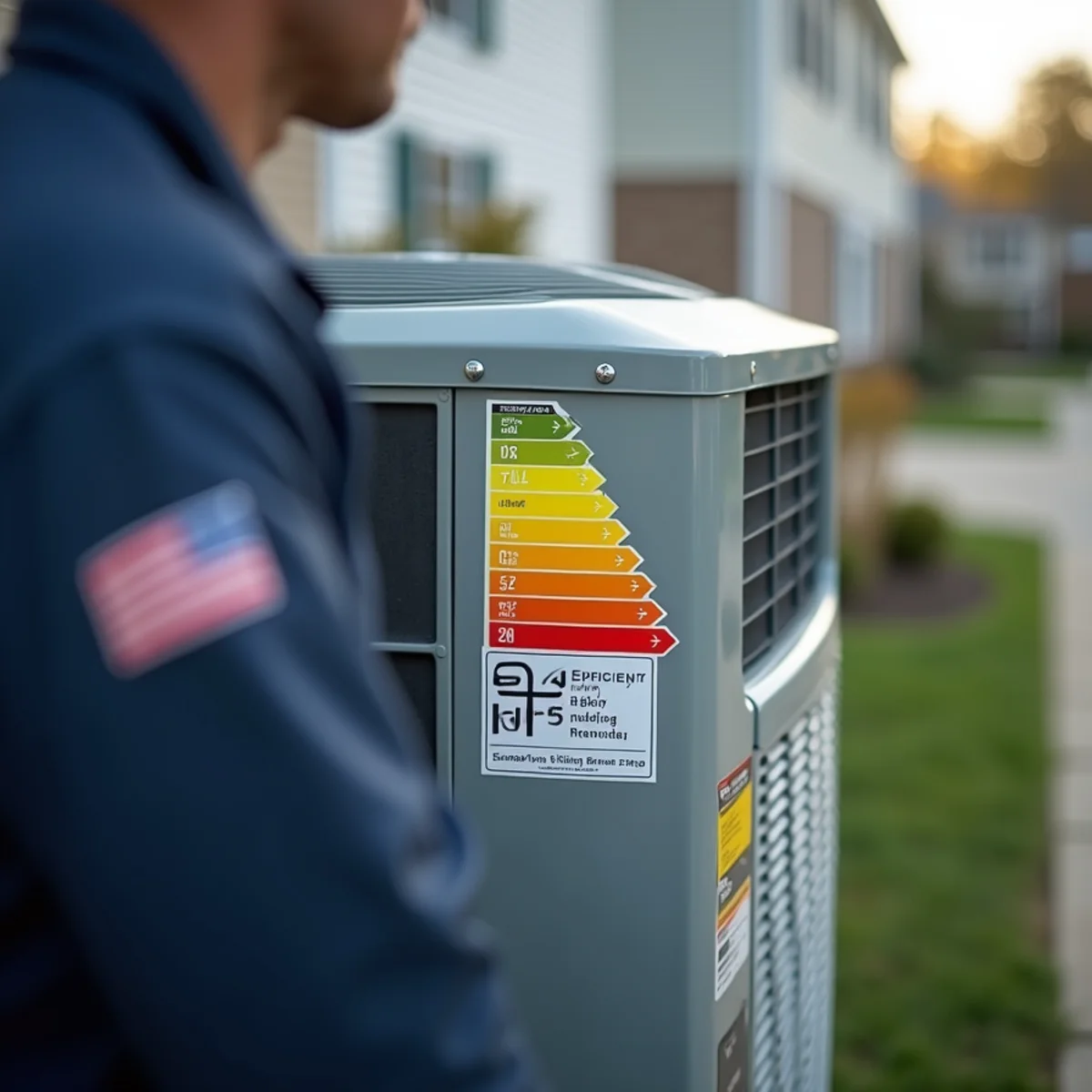
It is one of the first questions every Stafford homeowner asks when a system needs replacing: what size do I need? It feels like it should have a simple answer, and plenty of contractors will give you one in thirty seconds by eyeballing your square footage. The trouble is that the quick answer is often wrong, and in our humid climate the wrong size causes real comfort problems.
Proper sizing is not guesswork. It comes from a calculation that weighs how much heat your specific home gains in summer and loses in winter. This guide explains how HVAC equipment is measured, why bigger is not better here, and what a correct sizing process actually looks like, so you can tell a thorough quote from a lazy one.
How HVAC Capacity Is Measured
Air conditioners and heat pumps are rated in tons, and furnaces are rated in BTUs, which stands for British thermal units. One ton of cooling equals 12,000 BTUs per hour. A typical Stafford single-family home might need somewhere between two and five tons of cooling, but that span is wide on purpose, because the right number depends on far more than floor area.
Furnace and heating capacity is given directly in BTUs of input or output. The key idea is that capacity has to match the load: the amount of heat your home gains on a hot August afternoon or loses on a cold January night. Too little capacity and the system runs constantly without keeping up. Too much, and you get the oversizing problems we will cover next.
Why the Square-Footage Rule of Thumb Falls Short
The old shortcut, roughly one ton of cooling per 500 to 600 square feet, is a starting point at best. It ignores almost everything that actually drives your home's load. Two houses the same size on the same street in Embrey Mill can need very different equipment depending on how they were built and how they face the sun.
A real sizing has to account for the things a tape measure cannot see. Insulation levels, window area and orientation, ceiling height, ductwork condition, air leakage, and even the number of people and heat-producing appliances all change the answer. A rule of thumb that ignores all of that is how homes end up with equipment that is a full ton too big or too small.
- Insulation quality in the attic, walls, and crawlspace
- Window area, type, and whether they face the hot afternoon sun
- Ceiling height and overall air volume, not just floor area
- Ductwork size, layout, and how much air it leaks
- Air sealing and infiltration around doors, windows, and penetrations
- Occupancy and heat from appliances, lighting, and electronics
What a Manual J Load Calculation Is
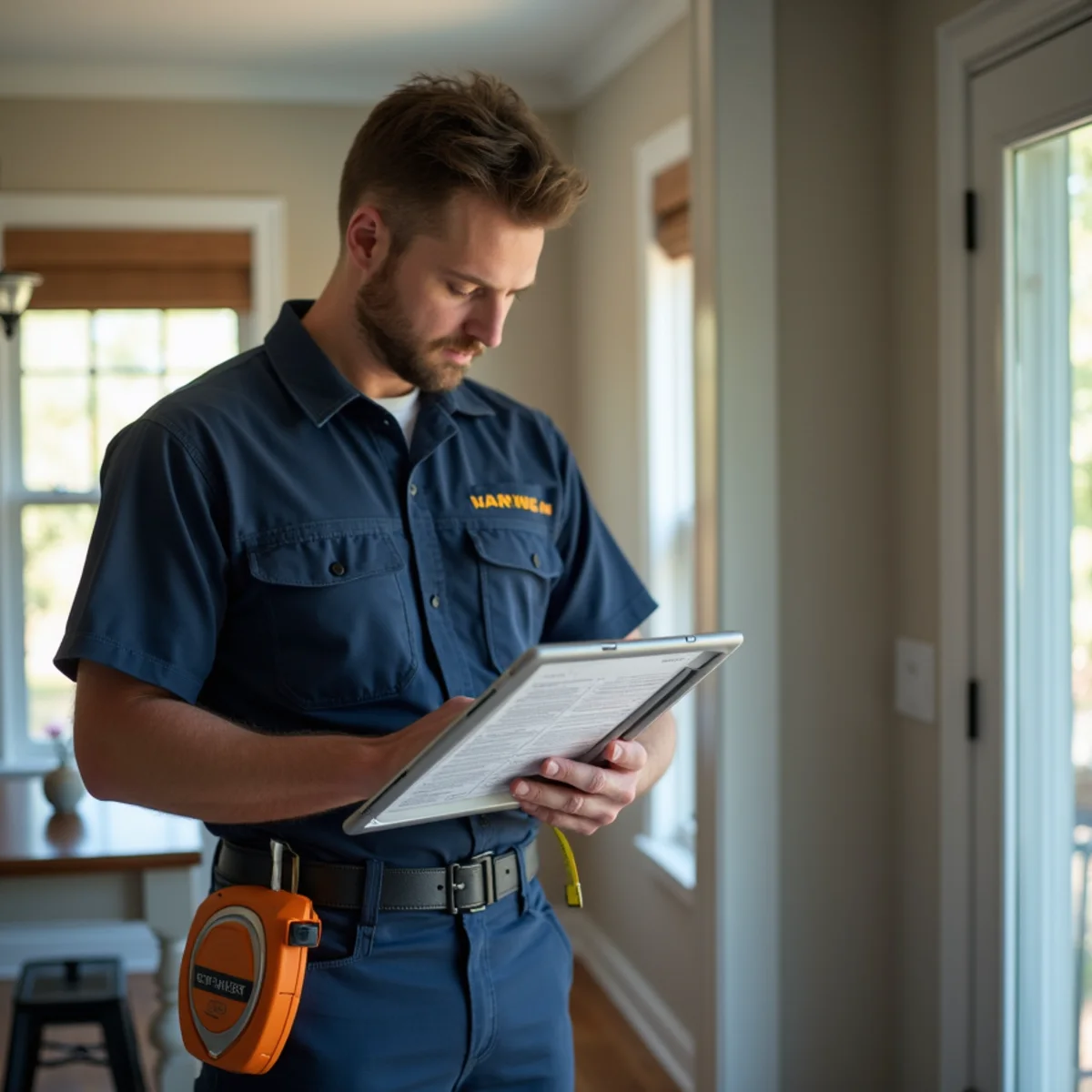
The industry standard for sizing is a Manual J load calculation. It is a room-by-room analysis that adds up every source of heat gain and loss in your home to produce an accurate load in BTUs. A technician measures rooms and windows, notes insulation and orientation, factors in Stafford's design temperatures, and runs the numbers through software that follows the Manual J method.
The result tells you how much cooling and heating your home truly needs, which then points to the correct equipment size. A proper Manual J is the difference between a system engineered for your house and one grabbed off a truck because it was close. Reputable contractors perform one before quoting a replacement, and you are well within your rights to ask to see it.
Manual J pairs with two companion steps: Manual S, which selects equipment to match the calculated load, and Manual D, which sizes the ductwork. Together they make sure the system, the capacity, and the air delivery all agree. When a quote skips straight to a model number with no calculation behind it, that is a red flag worth questioning.
Why Bigger Is Not Better in Stafford's Climate
It is tempting to think a larger system means better comfort, like a bigger engine in a car. With air conditioning in a humid climate, the opposite is true. An oversized AC cools the air to the thermostat setpoint so quickly that it shuts off before it has run long enough to pull moisture out of the air. The result is a house that is cold and clammy at the same time, exactly the complaint we hear most often in Stafford summers.
Oversized equipment also short-cycles, snapping on and off in brief bursts. That constant stopping and starting wears out compressors and blowers faster, drives up energy bills, creates uneven temperatures from room to room, and makes the system noisier. The moisture problem is the one people feel most, because high indoor humidity makes 74 degrees feel sticky and encourages mold and dust mites.
A correctly sized system runs in longer, steadier cycles. Those longer runtimes are what actually wring humidity out of the air and keep temperatures even throughout the house. In our climate, a right-sized system that runs more is genuinely more comfortable and more efficient than an oversized one that barely runs at all.
What to Ask Before You Buy
You do not need to run the calculations yourself, but you can make sure the contractor did. A few direct questions quickly separate a thorough proposal from a guess, and good technicians welcome them.
- Did you perform a Manual J load calculation for my home specifically?
- Can I see the load numbers and the design assumptions behind them?
- How does the proposed size compare to my old system, and why?
- Did you check and size the ductwork, not just the equipment?
- How will this size perform on humidity, not just temperature?
Related Stafford HVAC Help
Frequently Asked Questions
Not necessarily. Your old system may have been oversized or undersized to begin with, and your home may have changed with new windows, insulation, or an addition. A fresh Manual J load calculation confirms the correct size today rather than repeating a decades-old guess that could be wrong.
A thorough Manual J for a typical Stafford home takes the technician some time on site to measure rooms and windows and note insulation and orientation, plus time to run the software. It is not instant, and that is the point. A size offered in seconds from square footage alone has skipped the real work.
An oversized AC cools fast and shuts off before removing enough humidity, leaving your home cold but clammy. It also short-cycles, which wears out parts, raises energy bills, and creates uneven temperatures. In Stafford's humid summers, oversizing is one of the most common causes of poor comfort.
The honest answer to what size do I need is that it depends on your specific home, and the only reliable way to find out is a Manual J load calculation rather than a square-footage shortcut. In Stafford's humidity, resist the urge to size up: a right-sized system that runs in long, steady cycles will keep your home both cooler and drier than an oversized one.
If you are planning a replacement, insist on a real load calculation and ask to see the numbers. Our licensed local techs perform Manual J sizing on every installation and will walk you through exactly why we recommend the capacity we do. Call HVAC Stafford VA at +1 (327) 210-5999 for a free estimate.
Call +1 (327) 210-5999