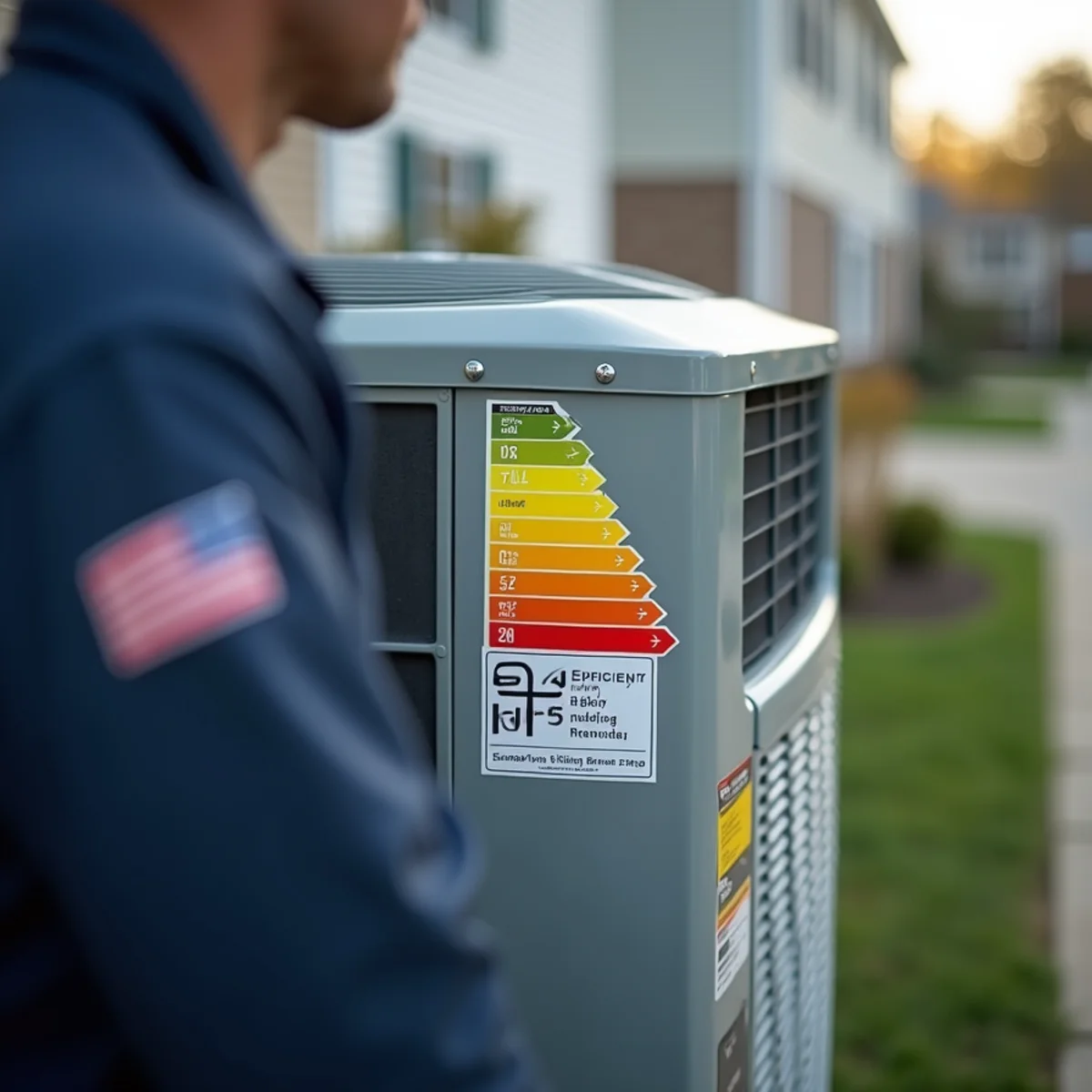
Shop for a new air conditioner or heat pump and you will run straight into a wall of acronyms, chief among them SEER2 and HSPF2. These are the efficiency ratings that tell you how much cooling and heating a system delivers for the energy it uses. Higher numbers mean lower energy bills, but the highest number is not automatically the smartest buy.
This guide translates the ratings into plain English for Stafford homeowners, explains the minimums that took effect in 2023, and offers a balanced way to decide how far up the efficiency ladder is worth climbing for your home. The aim is to help you spend wisely, not to push the priciest unit on the shelf.
What SEER2 and HSPF2 Actually Measure
SEER2 stands for Seasonal Energy Efficiency Ratio, version 2. It measures cooling efficiency across a whole season, so the higher the SEER2, the less electricity your AC or heat pump uses to deliver the same cooling. Think of it like miles per gallon for your air conditioner: a higher rating stretches each unit of energy further.
HSPF2 stands for Heating Seasonal Performance Factor, version 2, and it does the same job for a heat pump's heating mode. A higher HSPF2 means more efficient heating through the winter. Both ratings apply to heat pumps, since they heat and cool, while a straight air conditioner carries only a SEER2 rating.
The small 2 at the end matters. In 2023 the testing procedure changed to better reflect real-world conditions, and the ratings were renamed SEER2 and HSPF2. The new numbers run slightly lower than the old SEER and HSPF figures for the same equipment, so do not be alarmed if a modern unit shows a number that looks lower than an older brochure. You are comparing two different scales.
The 2023 Minimum Standards for Our Region
Efficiency minimums are set by the federal government and vary by region. Virginia falls in the Southeast region, which has higher minimums than the northern states because our cooling season is longer. As of 2023, new split-system air conditioners in the Southeast must generally meet at least 14.3 SEER2, and heat pumps must meet their own SEER2 and HSPF2 floors.
In practical terms, you cannot buy a brand-new system below the legal minimum, so the real question is how far above the floor to go. Entry-level equipment sits right at the minimum, mid-tier systems climb into the higher teens, and premium variable-speed systems can reach the low twenties in SEER2 with strong HSPF2 heating numbers to match.
- Entry level: right around the 14.3 SEER2 regional minimum for air conditioners
- Mid tier: roughly 16 to 18 SEER2, often with two-stage operation
- High efficiency: about 18 to 20-plus SEER2, usually variable-speed inverter systems
- Heat pumps add an HSPF2 heating rating, with higher numbers cutting winter running cost
- Variable-speed systems also improve humidity control, which matters in Stafford summers
How High Should You Go?
A higher SEER2 lowers your energy bills, but the equipment costs more up front, so there is a point of diminishing returns. The right target depends on how long you will stay in the home, how much you run the system, and whether comfort features matter to you beyond the raw efficiency number.
For a Stafford homeowner planning to stay many years and run the AC hard through our long cooling season, a mid-to-high efficiency system often pays back its premium through lower bills. For someone who may sell within a few years, a solid mid-tier unit frequently makes more sense than stretching for the top rating. There is no single correct answer, only the one that fits your timeline and budget.
It is also worth looking past the sticker number. Variable-speed systems that carry high SEER2 ratings run longer and gentler, which in our humid climate means noticeably better moisture control and quieter, steadier comfort. For many homeowners that comfort improvement, not the energy savings alone, is what justifies the step up.
Efficiency Only Pays Off With a Correct Install
Here is the part the rating sticker does not tell you: a high-SEER2 system installed poorly will never deliver its rated efficiency. Leaky ductwork, an incorrect refrigerant charge, or a system sized wrong for the home can quietly erase the savings you paid a premium to get. The lab number assumes everything downstream is done right.
That is why the install matters as much as the equipment. A correct load calculation, sealed and properly sized ductwork, and an accurate charge are what let a high-efficiency system actually perform like its label. A mid-tier unit installed meticulously will often out-save a premium unit installed carelessly.
Rebates, Incentives, and the Real Payback
Higher-efficiency systems frequently qualify for manufacturer rebates and federal or utility incentives, which can meaningfully narrow the price gap with standard equipment. Those incentives shift the payback math, so it is worth asking what a specific model currently qualifies for before you decide the premium is out of reach.
When you weigh it all together, the smart move is to compare total cost of ownership rather than either the sticker price or the SEER2 number alone. Factor in the upfront cost, any rebates, the expected energy savings over the years you will own the home, and the comfort features you value. That full picture, not a single acronym, is what points to the right system.
Related Stafford HVAC Help
Frequently Asked Questions
Because the measurement changed. In 2023 the testing procedure was updated and the ratings were renamed SEER2 and HSPF2, and the new scale reads slightly lower than the old one for the same equipment. You are comparing two different scales, not buying a less efficient system.
Virginia is in the Southeast region, where new split-system air conditioners must generally meet at least 14.3 SEER2, with heat pumps held to their own SEER2 and HSPF2 minimums. You cannot buy a new system below the legal floor, so the choice is how far above it to go.
Not always. A higher rating lowers energy bills but costs more up front, so payback depends on how long you stay and how hard you run the system. Many Stafford homeowners find a mid-to-high tier is the sweet spot, especially a variable-speed model that also improves humidity control.
SEER2 and HSPF2 are simply fuel-economy ratings for your cooling and heating, and higher numbers mean lower bills, but the best value is rarely the most extreme number on the shelf. Match the efficiency level to how long you will stay and how you use the system, remember that the quality of the installation decides whether you ever see the rated savings, and factor in any rebates before you rule out a higher tier.
If you want help comparing efficiency levels and payback for your own home, our licensed local techs will lay out honest numbers and make sure the install does the rating justice. Call HVAC Stafford VA at +1 (327) 210-5999 for a free estimate.
Call +1 (327) 210-5999