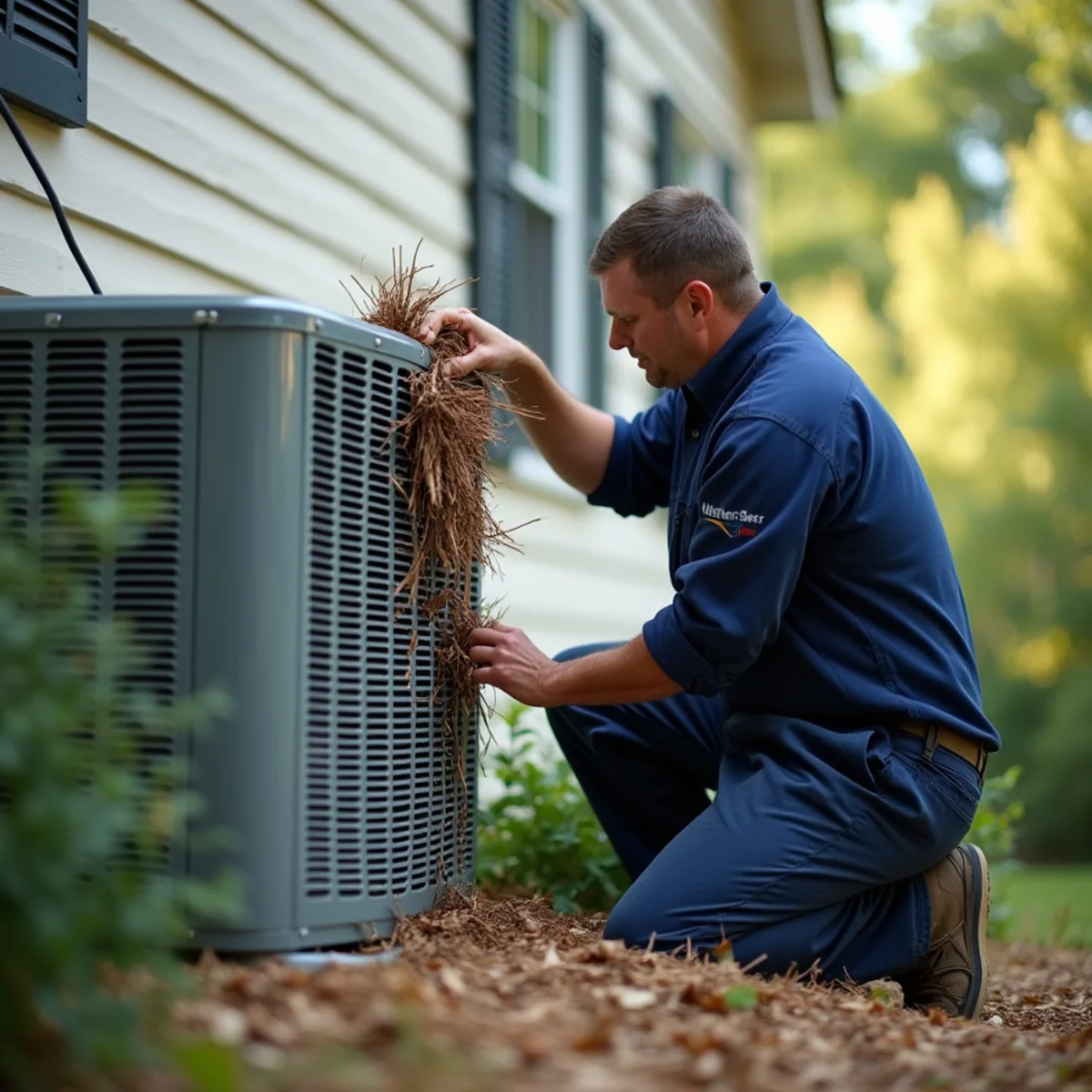
Your outdoor condenser lives a hard life. It sits outside year-round in Stafford's weather, and it depends on clean airflow across its coil to do its job. Pine straw, falling leaves, grass clippings, and the damp air near the tidal creeks all work against it, and most homeowners never give it a thought until it stops cooling.
The good news is that protecting the outdoor unit is mostly about a few simple habits. A clean, unobstructed condenser cools better, uses less energy, and lasts years longer. Here is what it faces in Stafford and how to keep it healthy.
What the condenser is fighting against here
The outdoor unit works by rejecting the heat it pulls out of your house into the outside air. It does that by blowing air across a coil wrapped in thin metal fins. Anything that blocks that airflow, or coats those fins, makes the unit work harder and cool less.
In Stafford, the usual culprits are pine straw and leaves that pile against the sides, grass clippings blown in by the mower, cottonwood and pollen in spring, and shrubs that grew in too close. Near the water, damp and mineral-laden tidal air speeds up corrosion on the coil and cabinet.
The seasonal habits that protect it
None of this takes long. Build it into your yard routine and the unit will thank you with a longer life and lower bills.
- Keep at least two feet of clearance on all sides and above the unit
- Rake pine straw and leaves away from the base each fall
- Aim the lawnmower discharge away from the condenser
- Rinse the coil gently with a garden hose (never a pressure washer)
- Trim shrubs and never let mulch or plantings crowd the fins
- Keep the unit level on its pad so it drains and vibrates less
Rinsing the coil the right way
A coil caked with pollen, dust, and cottonwood loses cooling capacity fast. You can rinse it yourself with a garden hose on a gentle stream, spraying from the inside out where you can reach, or straight through the fins from outside. The fins are thin aluminum and bend easily, so never use a pressure washer or a stiff brush.
If the coil is heavily fouled or the fins are already bent and matted, leave it to a professional. We use proper coil cleaner and fin combs to restore airflow without damaging the unit. A deep coil cleaning is part of every tune-up we do, and it makes a real difference on a Stafford condenser that has been collecting debris all season.
Covers, corrosion, and the tidal-air question
Homeowners often ask about covering the unit for winter. Do not wrap the whole thing in a solid cover; it traps moisture and invites rust and rodents. A breathable top cover to keep leaves and ice off is fine, but the sides need to breathe. And never run the AC with a full cover on.
For homes near Widewater, Aquia Creek, or the tidal Rappahannock, corrosion is the long-term enemy. The damp, mineral-heavy air eats at coils and cabinets over the years. Regular rinsing helps, and when it is time to replace, coated or corrosion-resistant coils are worth considering for a waterfront home.
Year-Round Condenser Care for Stafford Yards
Stafford's mix of mature trees, pine straw, pollen, and the occasional tidal breeze is hard on outdoor units. The single best thing you can do is keep two feet of clear space on all sides and hose the coil down gently from the inside out a couple of times each season to wash away the film that quietly steals capacity.
Through the year, keep grass clippings and mulch away from the base, trim shrubs back, and after storms clear leaves and branches off the top. Skip the full winter cover — it traps moisture and attracts rodents that chew wiring. These small habits add years to a condenser's life in our climate.
- Maintain two feet of clearance on all sides
- Rinse the coil gently each season
- Keep mulch, clippings, and shrubs back
- Clear debris after storms
- Avoid full winter covers that trap moisture
Related Stafford HVAC Help
Frequently Asked Questions
A breathable top cover to keep leaves and ice off the top is fine, but never wrap the whole unit in a solid cover. That traps moisture and invites rust and rodents. The sides need airflow, and you should never run the system with a full cover installed.
Aim for at least two feet of clear space on every side and several feet above the unit. Shrubs, fences, pine straw, and stacked items all restrict the airflow the condenser needs to reject heat, which cuts cooling and raises your energy use.
In our climate, a gentle coil rinse twice a season keeps pollen, pine straw, and cottonwood fluff from matting against the fins and choking airflow. Wooded and waterfront lots may need it more often. A professional tune-up includes a deeper coil cleaning that restores capacity a garden hose cannot reach.
Your outdoor unit does not ask for much, just clean airflow and a little clearance. Keep the pine straw and leaves away, rinse the coil gently, and give it room to breathe, and it will cool better and last longer through Stafford's hard seasons.
For a professional coil cleaning or a look at a corroding waterfront unit, call HVAC Stafford VA at +1 (327) 210-5999.
Call +1 (327) 210-5999